What I owned
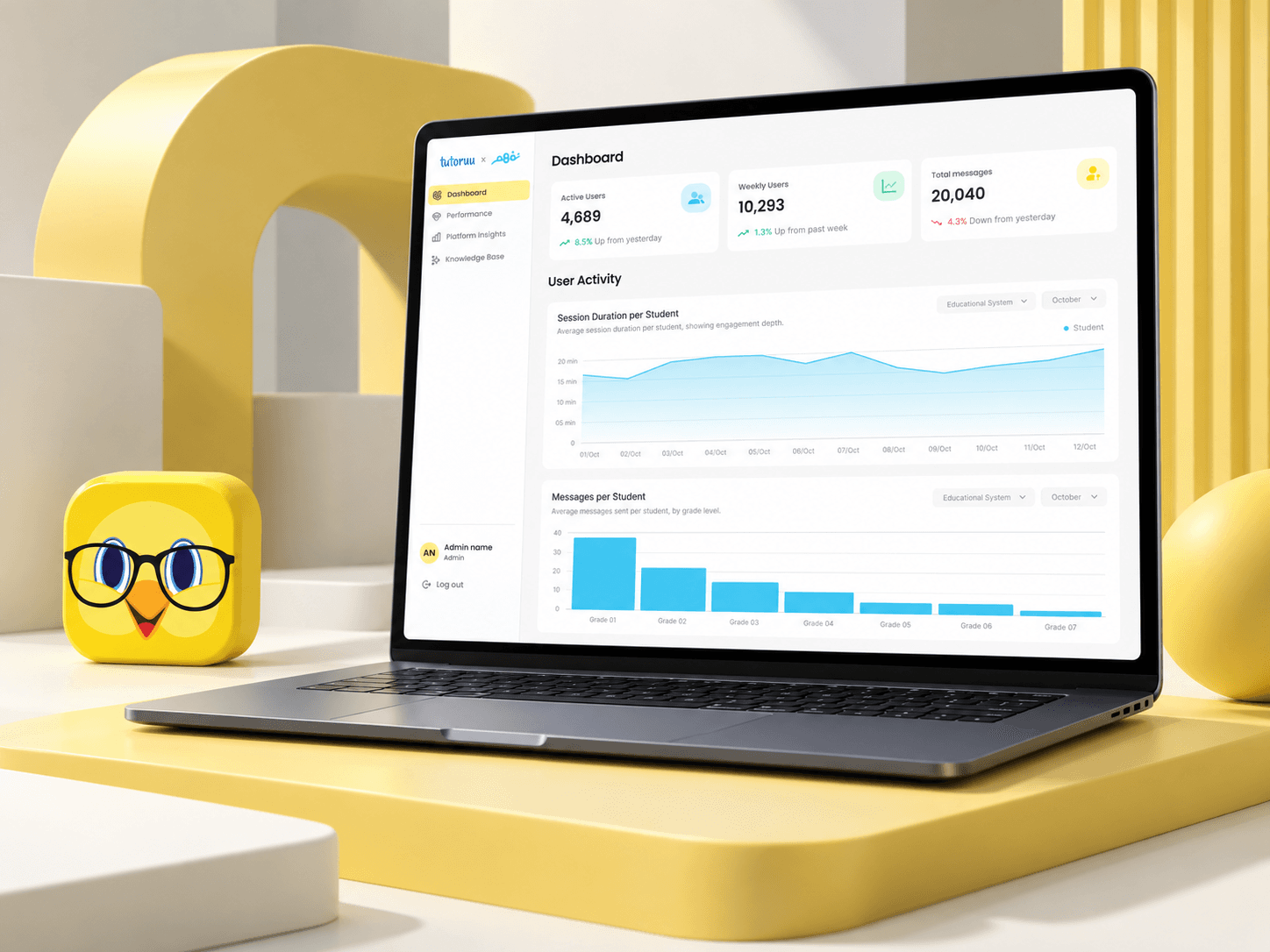
I led product design across B2C and B2B: consumer AI chat, enterprise dashboards, payment flows, onboarding, and multiple partner portals.
Tutoruu
20% engagement lift after landing redesign

Tutoruu · 2024Product Design · AI · EdTech · 2024
Solo product designer for a Forbes 30 Under 30 startup, working across AI chat, payment flows, and a multi-brand design system.
Four product surfaces, one designer, and no shared system.
engagement lift after landing redesign
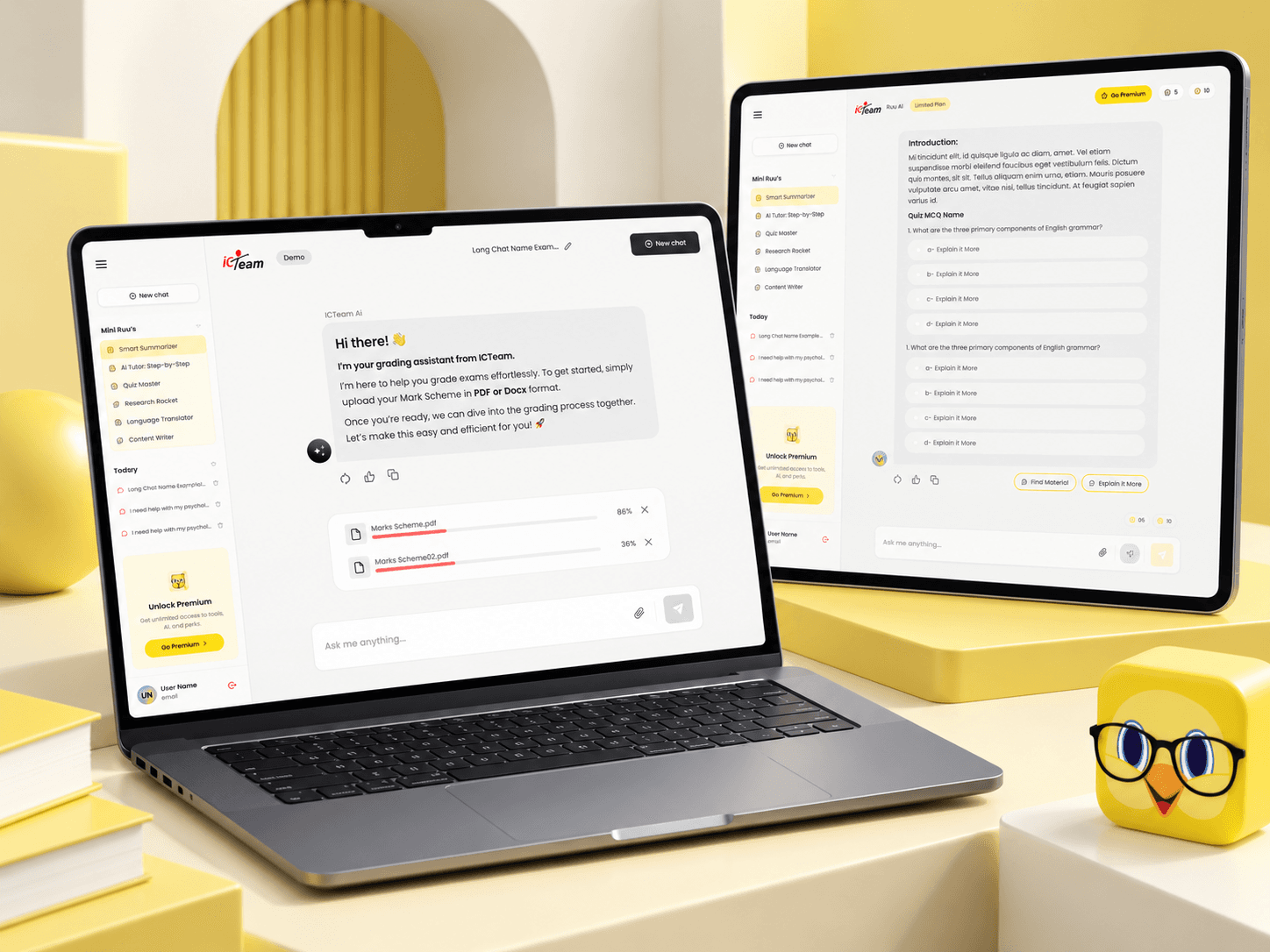
Tutoruu builds AI tools for university students and white-label platforms for institutional partners. I led product design across consumer AI chat, enterprise dashboards, payment flows, onboarding, and multiple partner portals. The work needed a shared system and clear journeys for different audiences.
I led product design across B2C and B2B: consumer AI chat, enterprise dashboards, payment flows, onboarding, and multiple partner portals.
No design system, frequent product changes, and payment expectations shaped by Egyptian students who use InstaPay and Fawry alongside credit cards.
The problems
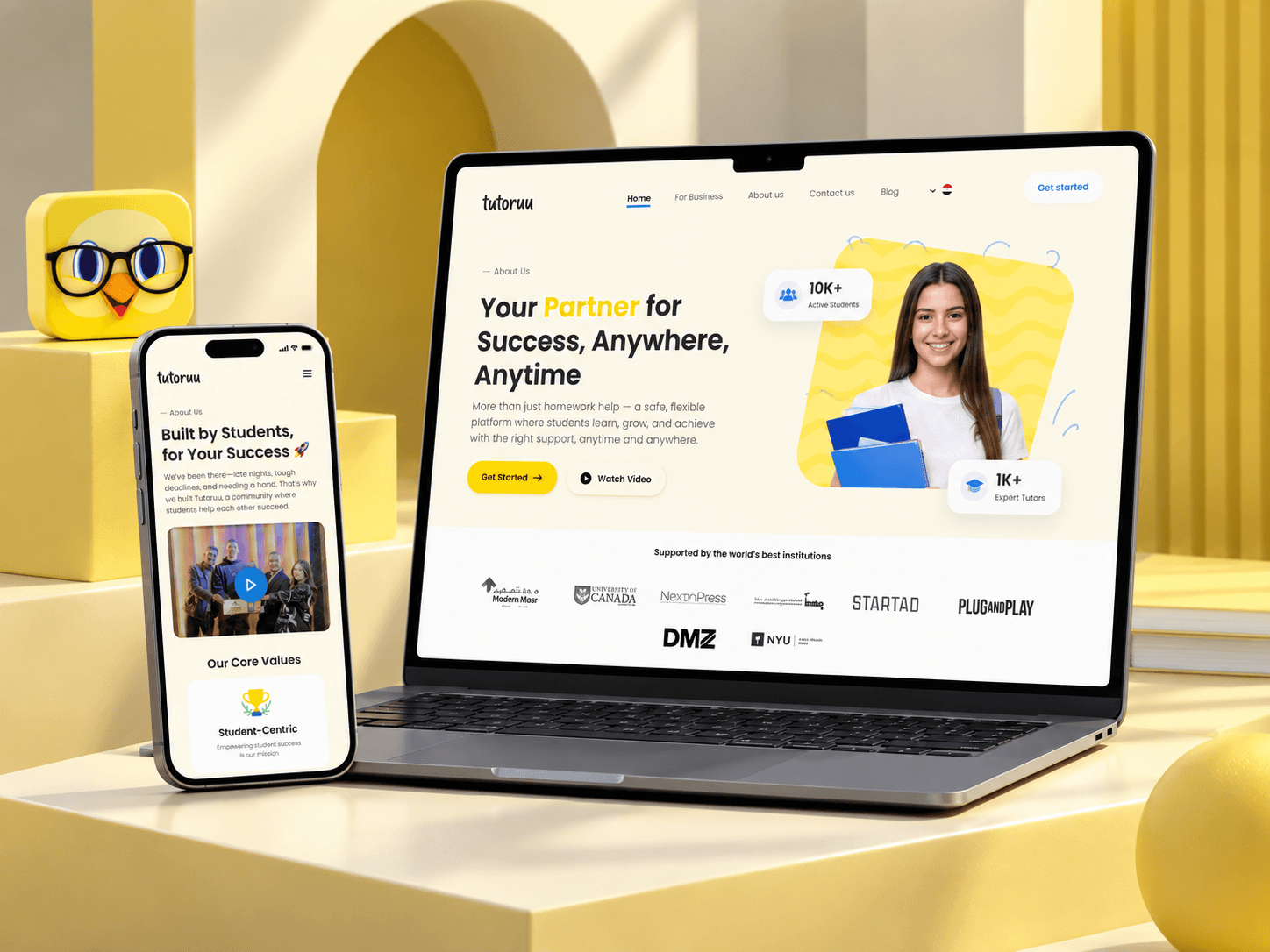
Hotjar heatmaps and Mixpanel data told a clear story: high bounce, low conversion. The page tried to serve B2B and B2C at once, and failed both. Users didn't know if they were a student or an institution.
Users engaged with the AI chat, then left frustrated. Session recordings showed why: they didn't know how to prompt it. Vague questions in, poor results out, churn. The AI was fine. The UX around it wasn't.
Sales flagged it, Mixpanel confirmed it. Users reached the payment screen and stopped. The platform only accepted credit cards, but the demographic was Egyptian students, low card penetration. The friction was structural, not superficial.
Multiple products, multiple teams, zero single source of truth. Every brand update meant manual rework across every product.
The decisions
Hotjar heatmaps, Mixpanel funnels, and session recordings named the real problems, before I touched a pixel.
Turned every metric drop into a UX hypothesis, not a visual tweak. The AI didn't need fixing; the path to it did.
Card sorting → redesign → usability testing → two iteration rounds, all in production with real users.
The solutions
Students and institutions needed different journeys, not one shared pitch.
I mapped both audiences, validated the structure with 8 users through usability tests and interviews, then refined the redesign in two rounds.
Users lacked prompting skills, not willingness. The fix wasn't a better AI. It was a UX bridge.
Designed pre-built prompt templates delivered through low-friction modals, so users had a clear way to begin the AI conversation.
Students don't use credit cards. They use InstaPay and Fawry.
Added both rails, then restructured pricing tiers using anchoring and the decoy effect.
Built a variables-based token architecture with multi-brand theming, exported to JSON for developer handoff, and validated in a private Storybook.
reported engagement lift
new payment rails added
solo product designer
Project period: Feb 2024 – Feb 2025
The AI was fine. The UX around it wasn't.
Gallery
Key visuals from the project, then the individual decision screens. Full-fidelity shots of those are coming soon.
I would establish the system before expanding the screens, so brand changes and handoff start from a shared foundation.
Related work